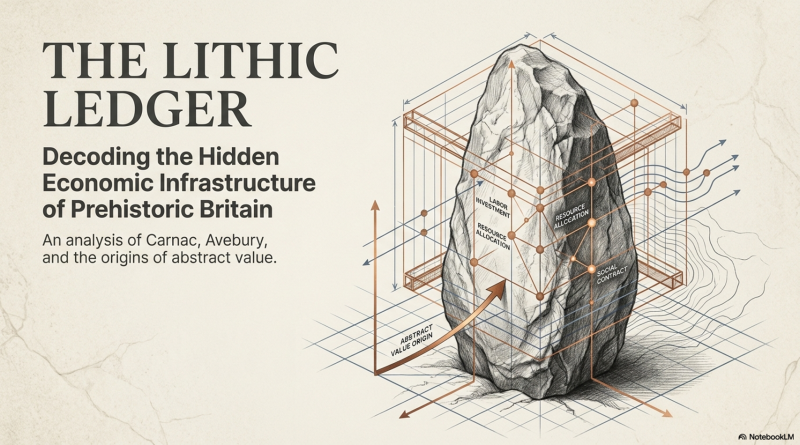
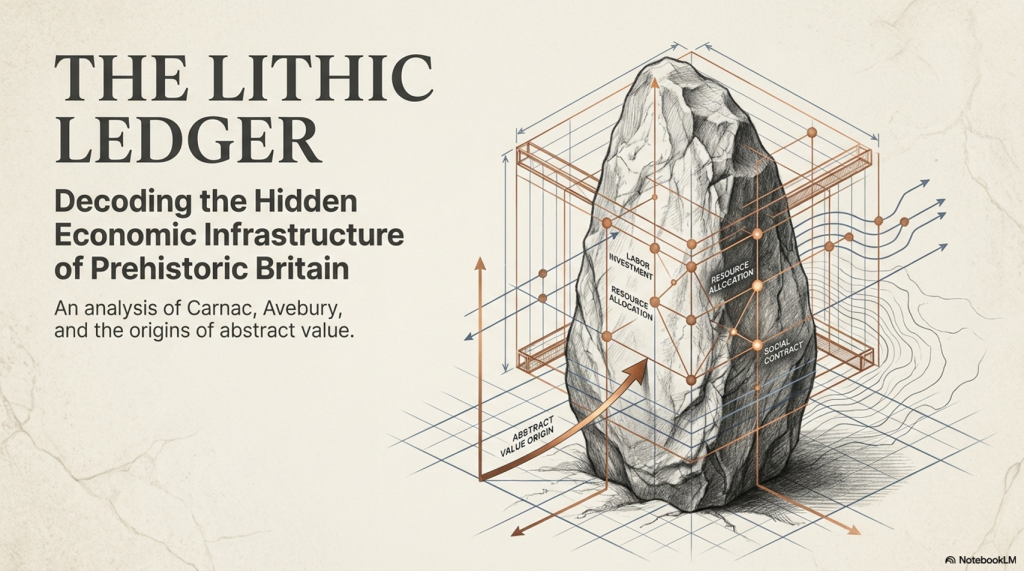
The Stone Money – Credit System
Introduction — The Economic System No One Is Looking For
What if the biggest mistake in archaeology is not what it believes… but what it refuses to consider?
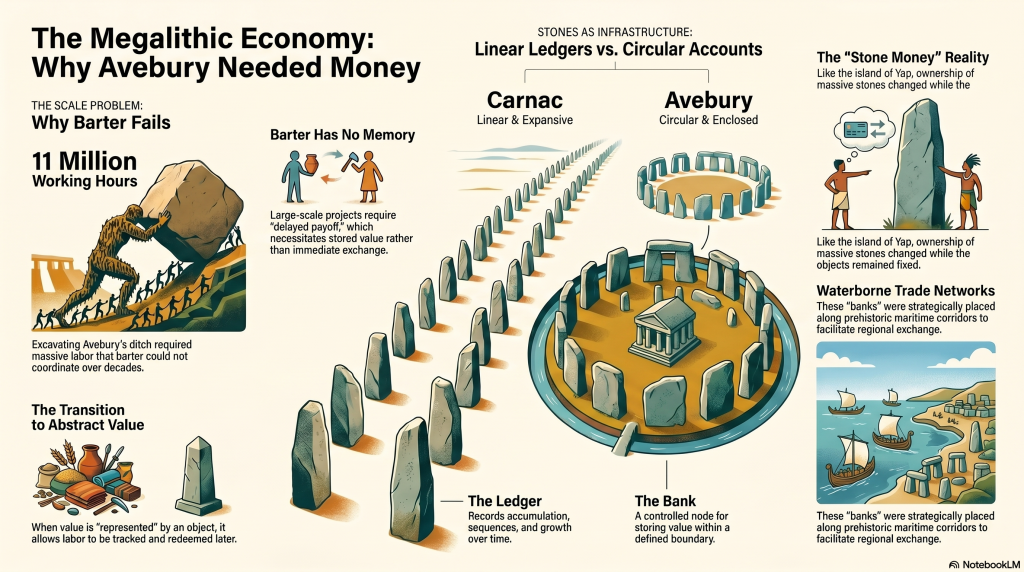
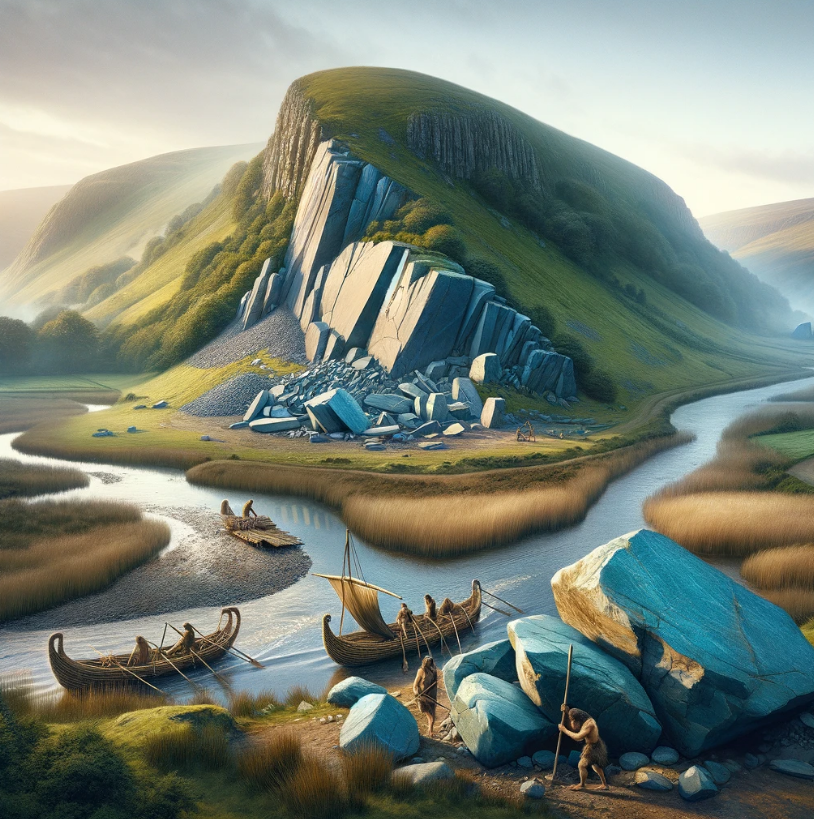
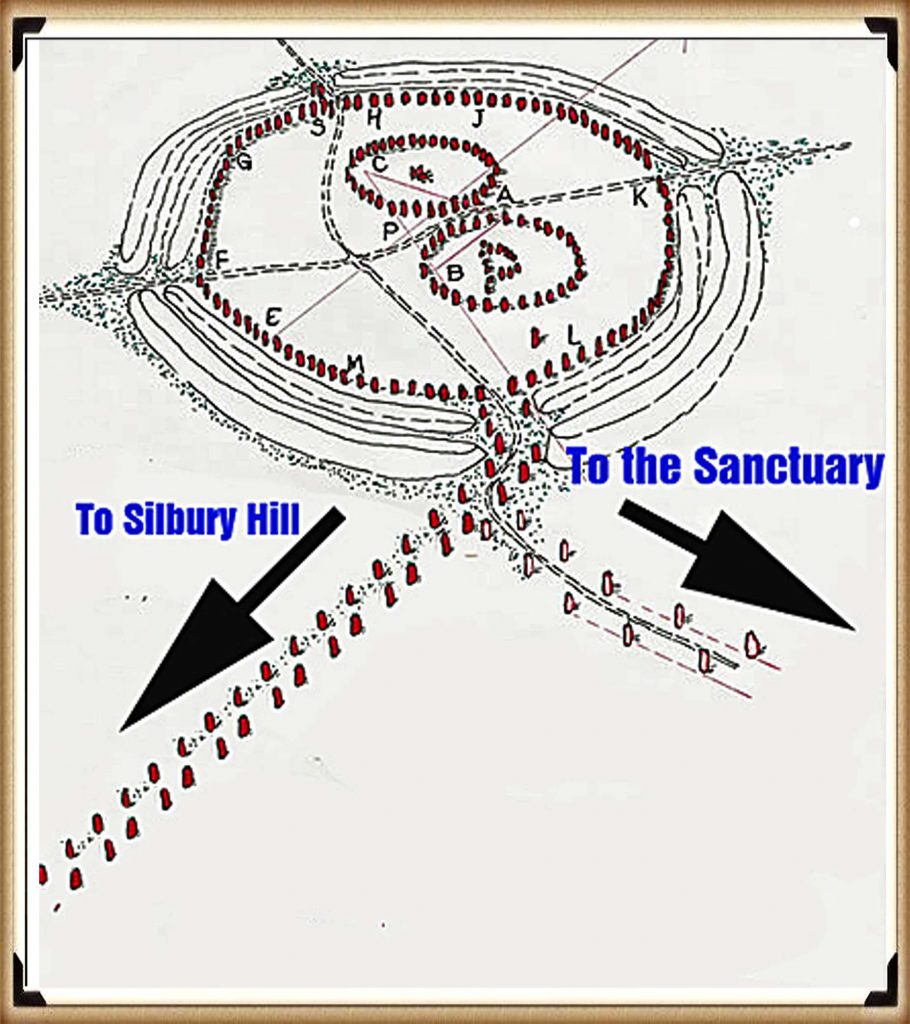
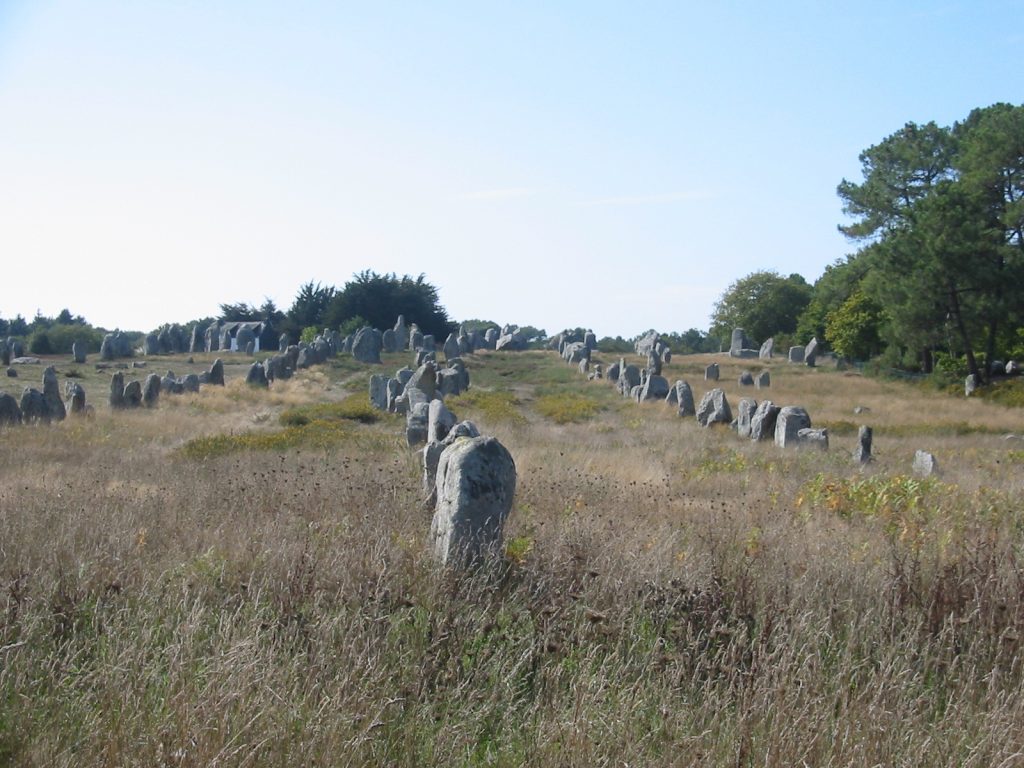
Across Britain and Western Europe, we find some of the largest construction projects ever undertaken by prehistoric societies. Sites like Avebury, with its vast ditch, towering stones, and monumental scale, required tens of millions of hours of coordinated labour. Further south, along the Atlantic façade, the immense stone fields of Carnac stones stretch for miles—thousands of stones arranged in deliberate, ordered sequences, on a scale that dwarfs anything found in Britain. (The Stone Money – Credit System)
And yet, for all this effort, one fundamental question is never asked:
What economic system made this possible?
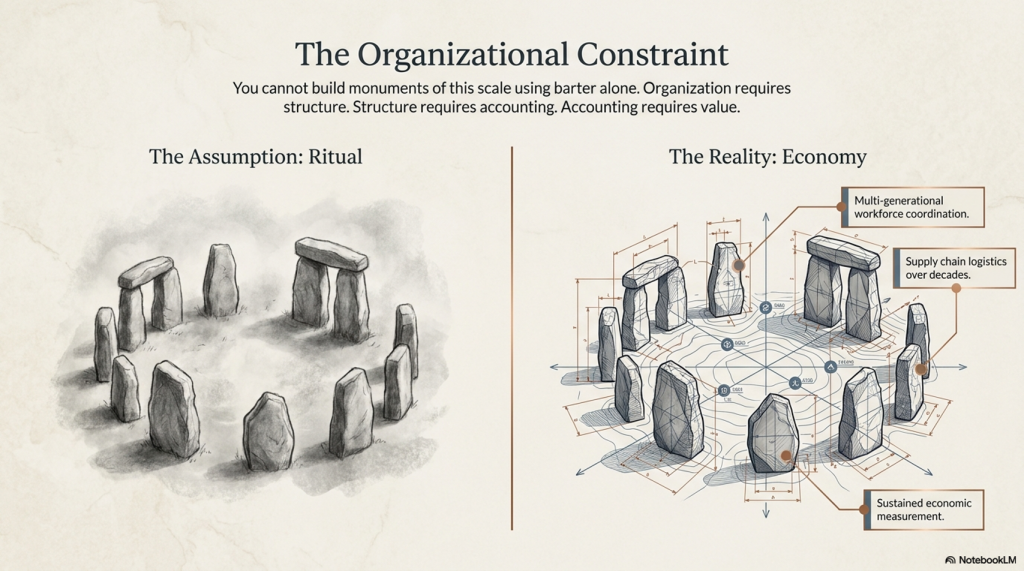
Instead, we are told these monuments are “ritual,” “ceremonial,” or “symbolic.” Words that describe—but do not explain. Because none of these interpretations addresses the single constraint that governs all large-scale human activity:
👉 Organisation requires structure.
👉 Structure requires accounting.
👉 Accounting requires value.
You cannot build monuments of this scale using barter alone. You cannot sustain a workforce of hundreds—let alone thousands—over decades without a system that stores, transfers, and measures value over time.
In other words:
You cannot build Avebury without money.
This blog explores a simple but deeply uncomfortable idea:
👉 The great stone monuments of prehistoric Europe were not just cultural or symbolic structures, but part of an economic system.
A system where value was not written on paper or struck in metal—but embedded in the landscape itself.
At first glance, the idea seems counterintuitive. Stone does not resemble currency—until you realise that modern money has no intrinsic value either. Its power comes from shared belief, collective recognition, and controlled scarcity. The same principles that underpin every functioning currency system today.
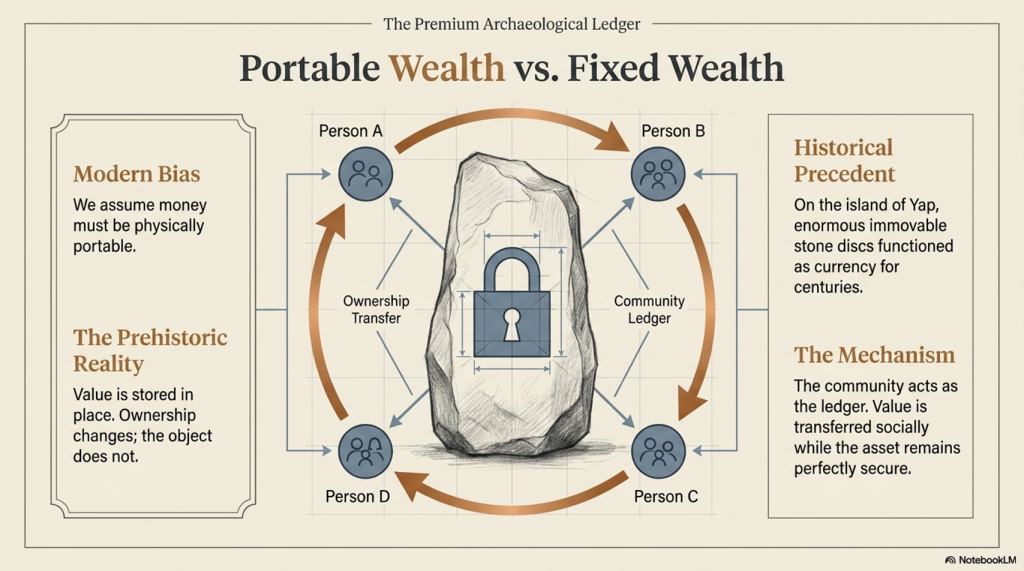
And crucially, we already know this type of system can exist. On the island of Yap, enormous stone discs functioned as currency for centuries—immovable, symbolic, and collectively understood. Ownership changed, but the stones themselves did not move.
So the question is no longer whether stone can function as money.
The question is:
👉 What happens when we apply that understanding to the prehistoric world?
Because when we do, something remarkable occurs.
Avebury stops looking like a ritual site.
Carnac stops looking like an anomaly.
And instead, both begin to resolve into something far more coherent:
👉 A connected system of value, operating across a prehistoric trading network that once linked the Atlantic world—from Doggerland to the Mediterranean.
This is not speculation layered onto mystery.
It is a shift in perspective—from symbolism to function.
And once that shift is made, the stones stop being silent.
They start behaving like infrastructure.
2. The Scale Problem — Why Barter Fails
Before we decide what the stones represent, we need to establish something far more fundamental:
👉 What kind of system is required to build monuments at this scale?
Because once that constraint is defined, most existing explanations collapse immediately.
The Physical Reality of Construction
Take Avebury as a baseline.
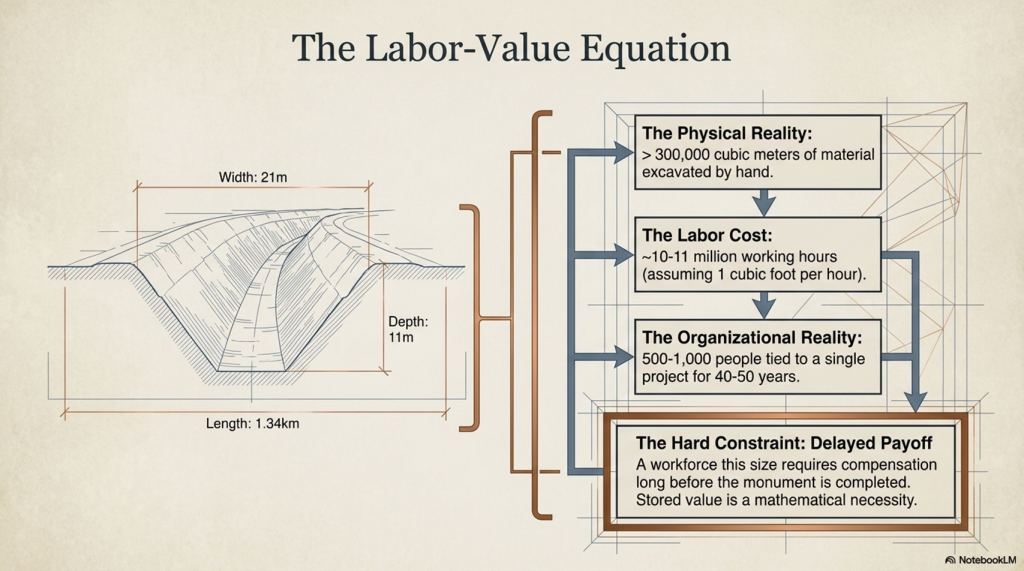
- Ditch: ~1.34 km long
- Width: ~21 metres
- Depth: ~11 metres
That is over 300,000 cubic metres of material excavated by hand.
Even using conservative assumptions:
- 1 cubic foot per hour per worker
- Continuous labour across seasons
You are looking at:
👉 ~10–11 million working hours
Which immediately raises a non-negotiable requirement:
👉 This is not a small, local effort
👉 This is a multi-generational, organised workforce
And that’s just the ditch.
It does not include:
- Quarrying and transporting megaliths
- Erecting stones weighing tens of tonnes
- Feeding, housing, and supplying the workforce
- Maintaining continuity over decades
The Organisational Constraint
At even a modest scale:
- 200 workers digging
- 200 supporting (food, tools, logistics)
- Additional labour for stone movement
You are already dealing with:
👉 500–1000 people tied into a single long-term project
Now extend that over:
👉 40–50 years
This is not seasonal cooperation.
This is:
👉 sustained economic coordination
Why Barter Cannot Work at This Scale
Barter systems function under very specific conditions:
- Small groups
- Immediate exchange
- Short timeframes
- Low complexity
They fail when you introduce:
- Delayed reward
- Large workforce coordination
- Multi-year commitments
Because barter has a fatal limitation:
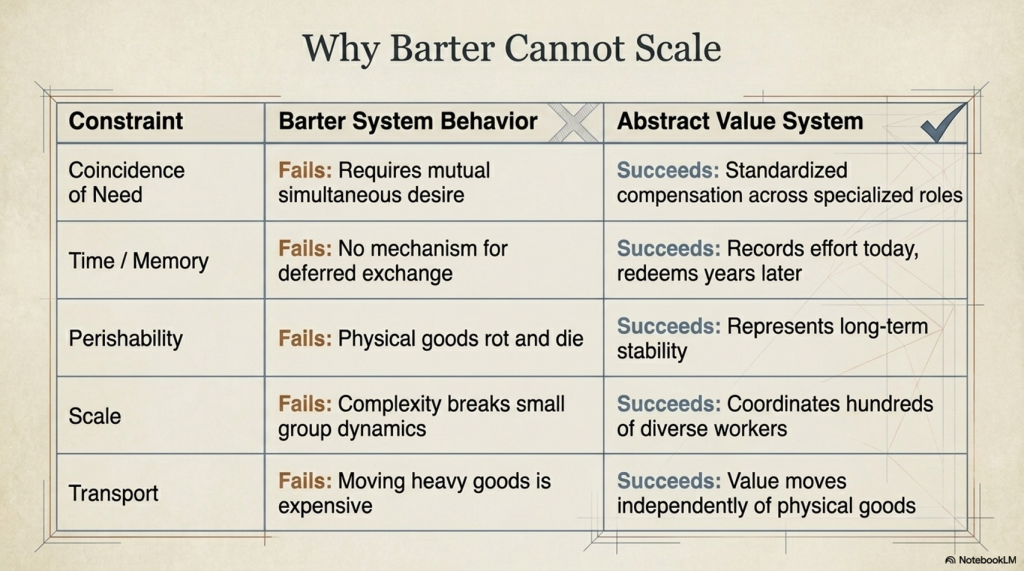
👉 It requires coincidence of need
If one worker digs a ditch today, what do they receive?
- Food? From whom?
- Tools? When?
- Shelter? For how long?
And more importantly:
👉 How is that value tracked over decades?
Barter has no memory.
It cannot store obligations.
It cannot scale across time.
It cannot coordinate hundreds of people toward a single goal.
The Time Problem — Labour Without Immediate Return
Large construction introduces a second constraint:
👉 Delayed payoff
The monument is not “used” until it is complete.
So the system must allow:
- Work now
- Reward later
Which requires:
👉 stored value
Not goods. Not promises.
But something that can:
- represent labour
- persist over time
- be recognised by the entire community
The Inevitable Conclusion
Once you define the problem correctly, the solution is no longer optional.
To build monuments like Avebury, a society must have:
👉 A system that records value
👉 A system that transfers value
👉 A system that stores value across time
In other words:
👉 A currency system
Not necessarily coins.
Not necessarily metal.
But something that performs the same function.
Extending the Problem Beyond Britain
Now expand the scale.
Sites like Carnac stones contain:
- Thousands of stones
- Arranged in ordered, repeatable sequences
- Extending across kilometres of landscape
This is not just construction.
This is:
👉 systematic expansion over time
Which implies:
- continuity
- accounting
- accumulation
And again, the same constraint applies:
👉 Barter cannot produce this.
3. The Failure of Barter Systems — Why Value Must Become Abstract
If barter cannot scale to build monuments, then the next step is obvious:
👉 Why exactly does it fail?
Because once that is understood in detail, the transition to a currency system stops being theoretical—and becomes inevitable.
The Coincidence Problem — The First Structural Failure
Barter depends on one fragile condition:
👉 Both parties must want what the other has, at the same time
This works in small, immediate exchanges:
- Fish for grain
- Tools for meat
But now apply that to a workforce building something like Avebury:
A digger works all day excavating chalk.
What do they receive?
- Food? From whom specifically?
- Clothing? At what interval?
- Tools? In exchange for what exact quantity of labour?
Now multiply that across hundreds of workers.
👉 The system collapses instantly.
Because there is no mechanism to align:
- labour
- need
- timing
Barter cannot coordinate complexity.
The Time Problem — Barter Has No Memory
Barter only works in the present.
It cannot do this:
- Record effort today
- Redeem value weeks, months, or years later
But monument construction introduces a hard constraint:
👉 Labour must be rewarded long after it is performed
If someone contributes:
- 10 days of labour
- 100 days of labour
- 10 years of labour
Where is that value stored?
Without storage, the system breaks.
Because:
👉 Work without delayed compensation is unsustainable
And barter has no mechanism for:
- accumulation
- tracking
- deferred exchange

The Perishability Problem — Goods Cannot Store Value
Barter relies on real goods.
But real goods decay.
- Food rots
- Materials degrade
- Livestock die
So even if value is exchanged, it cannot be preserved.
Which creates a contradiction:
👉 Large projects require long-term value stability
👉 Barter only provides short-term value exchange
This is not a minor inefficiency.
It is a structural impossibility.
The Scaling Problem — Complexity Breaks the System
Barter works in:
- small groups
- simple exchanges
- short timeframes
It fails when you introduce:
- large populations
- specialised roles
- long-term coordination
Now consider:
- quarry workers
- transport teams
- tool makers
- food producers
- organisers
Each group contributes differently.
Each requires compensation differently.
Barter has no way to:
👉 standardise value across roles
Without standardisation:
👉 coordination fails
The Transport Problem — Value Must Move Without Goods
Now introduce trade.
Not local exchange—but regional movement.
Between sites like:
- Avebury
- Carnac stones
Goods are heavy.
Transport is expensive.
Distance introduces risk.
So a new requirement appears:
👉 Value must move independently of physical goods
Barter cannot do this.
Because barter is the goods.
The Critical Transition — From Goods to Representation
Once all these constraints are applied, a transition becomes unavoidable.
Value must:
- exist independently of goods
- be stored over time
- be recognised by a community
- be transferable without physical exchange
This is the moment where:
👉 value becomes abstract
Not imaginary—but represented
What “Abstract Value” Actually Means
This is often misunderstood.
Abstract value does not mean:
- symbolic in a vague sense
- decorative
- ritual
It means:
👉 A physical object represents something else
Labour
Ownership
Obligation
Debt
The object is not the value.
👉 It records the value.
The Inevitable Outcome
Once a society reaches:
- large-scale construction
- long-term coordination
- regional trade
It must develop:
👉 a system of representation
Because nothing else satisfies all constraints simultaneously.
Where This Leads Next
At this point, we have not identified the system.
But we have defined exactly what it must do.
So the next question becomes:
👉 What form could such a system take in a prehistoric world?
No writing.
No coinage.
No formal accounting.
And yet—
👉 The same functional requirements still exist.
4. Currency Before Metal — The Logical Evolution of Value Systems
Once barter fails, a society does not suddenly invent coins.
That’s a modern assumption—and it’s wrong.
Currency does not begin with metal.
👉 It begins with representation
Breaking the Modern Bias
We instinctively associate money with:
- coins
- precious metals
- minted value
But this is the end of a long evolutionary process—not the beginning.
Because metal currency requires:
- mining infrastructure
- smelting technology
- standardised production
- controlled distribution
None of which is necessary for a functioning value system.
So the real question is not:
👉 “Where are the coins?”
But:
👉 “What did they use before coins were possible?”
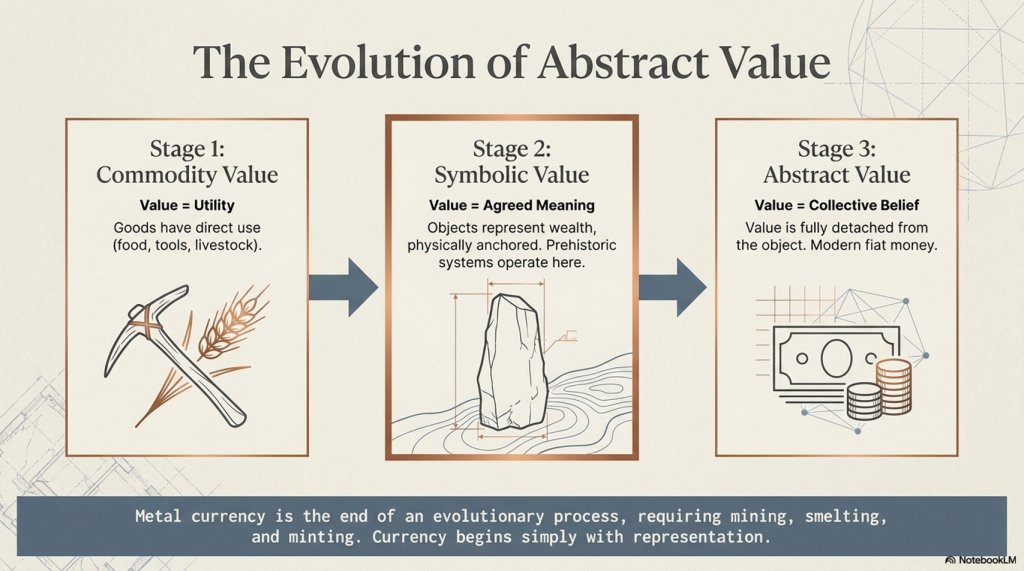
The Three Stages of Value
All economic systems follow the same progression:
1. Commodity Value
- Goods have direct use
- Food, tools, livestock
👉 Value = utility
2. Symbolic Value
- Objects represent wealth
- Rare, durable, recognisable
👉 Value = agreed meaning
3. Abstract Value
- Value becomes detached from the object
- Trust replaces utility
👉 Value = collective belief
Modern money sits at Stage 3.
But prehistoric systems operate in Stage 2:
👉 Symbolic, but physically anchored
What Makes Something “Money”?
To function as currency, an object must satisfy four conditions:
- Recognisable — everyone knows what it represents
- Durable — it survives over time
- Difficult to replicate — prevents inflation
- Socially agreed — value is collectively accepted
Notice what is not required:
- portability (large-scale systems don’t need it)
- intrinsic value (gold is only valuable because we agree it is)
The Critical Insight — Value Is Not Real
This is the point most people resist.
A modern banknote:
- is paper
- has no intrinsic worth
Yet it can represent:
👉 a house
👉 a year of labour
👉 an entire business
Why?
👉 Because value is assigned—not inherent
This is known as:
👉 perceived value
And once you accept that—
The leap to prehistoric systems becomes straightforward.
Why Stone Fits the Model Perfectly
Now apply the four conditions:
- Recognisable → large, visible, impossible to ignore
- Durable → survives generations
- Difficult to replicate → requires labour, transport, coordination
- Socially agreed → embedded within a shared landscape
Stone is not a poor substitute for currency.
👉 It is an ideal early form of it.
Reframing the Question
Instead of asking:
👉 “Why build with stone?”
We should be asking:
👉 “What if stone was the system?”
Because once value becomes:
- fixed
- visible
- communal
It no longer needs to be carried.
From Portable Wealth to Fixed Wealth
Modern systems emphasise portability:
- coins
- notes
- digital transfers
But early systems prioritise:
👉 stability and verification
Which leads to a different model:
- value is stored in place
- ownership changes, not the object
- community acts as the ledger
This is not primitive.
👉 It is structurally efficient at scale.
Extending the Logic to Monumental Landscapes
Now return to sites like:
- Avebury
- Carnac stones
Ask a different question:
👉 Why are the stones:
- massive
- permanent
- publicly visible
- arranged in ordered systems
These are not decorative choices.
They are exactly what you would expect from:
👉 a system designed to represent and stabilise value
5. The Yap System — Proof That Stone Can Be Money
At this point, a natural objection appears:
👉 “This all sounds logical—but has any society ever actually used stone as currency?”
The answer is not hypothetical.
👉 Yes. They have.
And not in small tokens—but in massive, immovable stones.
Yap — A Working Stone Currency System
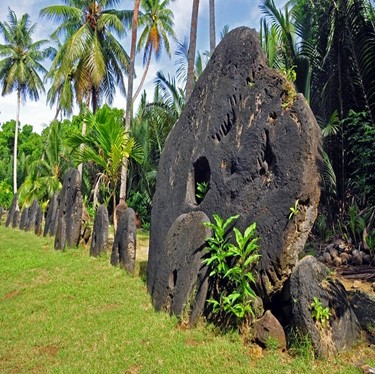
On the Pacific island of Yap, a fully functioning economic system developed using what are known as rai stones:
- Large, carved stone discs
- Some over 3–4 metres in diameter
- Weighing several tonnes
These were not symbolic ornaments.
👉 They were currency.
How the System Actually Worked
The key features of the Yap system are critical—because they directly mirror what we are trying to explain.
1. The Stones Do Not Move
Rai stones are typically:
- placed in prominent locations
- left in situ for generations
When ownership changes:
👉 The stone stays where it is
Only the ownership changes.
2. Ownership Is Socially Recorded
There are no written ledgers.
Instead:
👉 The community collectively knows:
- who owns each stone
- its history
- the transactions associated with it
This creates a distributed system of verification.
👉 The people are the ledger.
3. Value Is Not Just Size — It Is History
A stone’s value depends on:
- how large it is
- where it came from
- how difficult it was to transport
- who previously owned it
For example:
👉 A smaller stone with a dangerous or prestigious history
can be worth more than a larger, easily obtained one.
4. Effort Creates Value
To acquire these stones:
- expeditions travelled long distances
- stones were quarried on foreign islands
- transported by raft across open ocean
Many expeditions failed.
Some people died.
👉 That risk and effort are what give the stone value.
The Critical Point
This system satisfies every requirement we defined earlier:
- Recognisable → publicly visible stones
- Durable → last for centuries
- Difficult to replicate → high effort and risk
- Socially agreed → community recognition
And crucially:
👉 Value is completely detached from utility
The stones are not tools.
They are not consumed.
They are not moved.
👉 They exist purely to represent value
The Most Important Insight — Movement Is Not Required
This is where modern thinking breaks down.
We assume money must:
- be portable
- be exchanged physically
But the Yap system proves otherwise:
👉 Ownership can move without the object moving
This is not primitive.
It is extremely efficient.
Because:
- the object cannot be lost
- it cannot be stolen easily
- it cannot be counterfeited
Scaling the Concept
Now step back and think carefully.
If a small island society can operate:
👉 a fully functional economy
👉 using large, immovable stones
👉 with no written system
Then the idea that prehistoric Europe could do the same is no longer radical.
👉 It is expected under the same constraints
Bridging to the Prehistoric World
Now apply the same principles to:
- Avebury
- Carnac stones
Ask the same questions:
- Are the stones immovable? → Yes
- Are they publicly visible? → Yes
- Do they require immense effort to create and place? → Yes
- Would ownership need to be socially recognised? → Inevitably
At this point, the comparison is no longer loose.
👉 The systems are structurally identical.
6. Carnac — The Anomaly That Breaks Archaeology
If the stone money model is correct, then it should do something very specific:
👉 It should explain monuments that current archaeology cannot.
And there is no better test case than the vast alignments of Carnac stones.
The Scale of the Problem
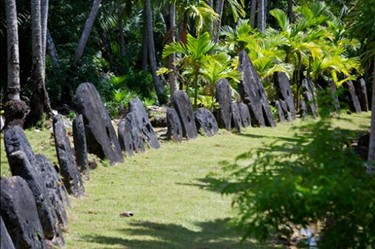
Carnac is not just another stone site.
It is:
- Thousands of standing stones
- Arranged in long, ordered rows
- Extending across kilometres of landscape
- Constructed and expanded over time
This is not a circle.
Not a monument.
Not a single phase of activity.
👉 It is a system.
And that is precisely the problem.
Why Existing Explanations Fail
Archaeology has offered the usual interpretations:
- Ritual landscape
- Ceremonial alignment
- Astronomical significance
But each of these fails under basic scrutiny:
Ritual
- Why thousands of stones?
- Why structured expansion?
- Why linear repetition instead of focal space?
Astronomy
- No consistent, repeatable observational framework
- No functional mechanism
- No need for this scale or redundancy
Ceremony
- No defined activity
- No evidence of use matching the scale of construction
These explanations describe the site.
👉 They do not explain why it exists in this form
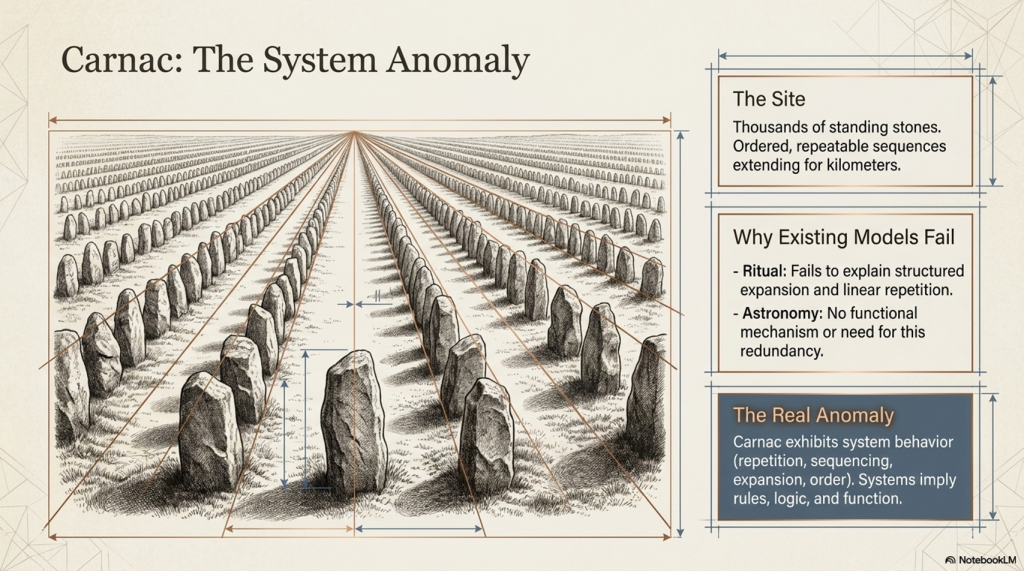
The Real Anomaly
The defining feature of Carnac is not just its size.
It is its structure:
- Repetition
- Sequencing
- Expansion
- Order
This is not symbolic randomness.
👉 It is system behaviour
And systems imply:
👉 rules
👉 logic
👉 function
Location — The Clue That Changes Everything
Now add the one factor that is consistently underplayed:
👉 Geography
Carnac sits:
- On the Brittany coastline
- With direct access to the Atlantic
- At a natural maritime interface
This is not an isolated inland ritual site.
👉 It is positioned on one of the most accessible coastal zones in Western Europe.
Now extend that context:
- North → Doggerland and the North Sea basin
- West → Atlantic façade
- South → Iberia and beyond
This is:
👉 a major prehistoric movement corridor
Reframing the Site
Now apply the same framework we used for the Yap system.
Ask different questions:
- Why so many stones?
- Why arranged in sequences?
- Why extended over time?
- Why located on a trade-accessible coastline?
Under ritual models, these questions have no clear answers.
Under a value system model:
👉 They become expected.
Carnac as a Linear System
Unlike Avebury, which is circular and centralised, Carnac is:
👉 linear and expansive
This is a crucial distinction.
Because a circular system suggests:
- a node
- a centre
- a hub
A linear system suggests:
👉 progression
👉 accumulation
👉 sequence
In other words:
👉 a ledger
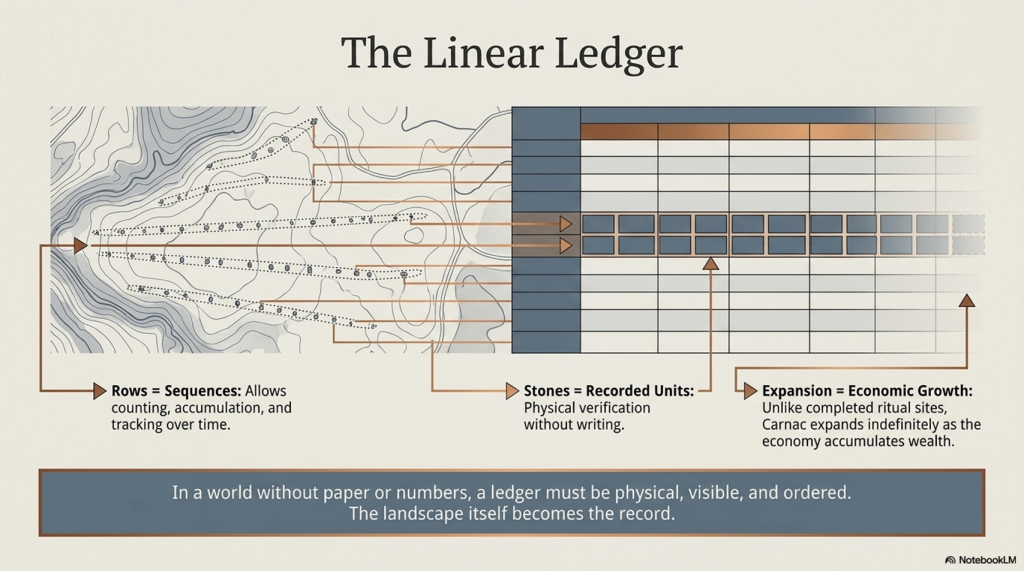
What a Ledger Looks Like Without Writing
In a world without:
- paper
- numbers
- written records
A ledger must be:
- physical
- visible
- ordered
Carnac fits that requirement perfectly:
- Stones = units
- Rows = sequences
- Expansion = growth
This is not symbolic decoration.
👉 It is a recording structure
The Scale Argument — Why This Matters
This is where Carnac becomes decisive.
Because Avebury alone could be dismissed as:
👉 local
👉 unique
👉 symbolic
Carnac cannot.
Its scale forces a different conclusion:
👉 This is not a local phenomenon
👉 This is a regional system
And once that is accepted:
👉 The economic model must scale with it
7. The Atlantic Trade Route — The Missing Context
Monuments do not exist in isolation.
They sit within:
👉 landscapes of movement
And if the stone systems at Carnac stones and Avebury are part of an economic structure, then that structure must have:
- routes
- connectivity
- flow
Because value systems only exist where exchange exists.
The Forgotten Infrastructure — Water
Modern interpretations assume land-based movement.
But your wider work has already demonstrated something critical:
👉 Early Britain was not a dry, stable landscape
It was:
- waterlogged
- saturated
- dominated by high river levels and floodplains
This is not speculation.
It is supported by:
- elevation-controlled site distribution
- peat formation across flooded landscapes
- hydrological lag after the last Ice Age
Which leads to a simple but transformative conclusion:
👉 Water was the primary transport system
Reconstructing the Prehistoric Map
Now reimagine the landscape:
- Valleys = wetlands or rivers
- Lowlands = marsh or floodplain
- Coastlines = dynamic, shifting
Movement over land becomes:
👉 difficult
👉 slow
👉 unreliable
Movement by water becomes:
👉 efficient
👉 scalable
👉 predictable
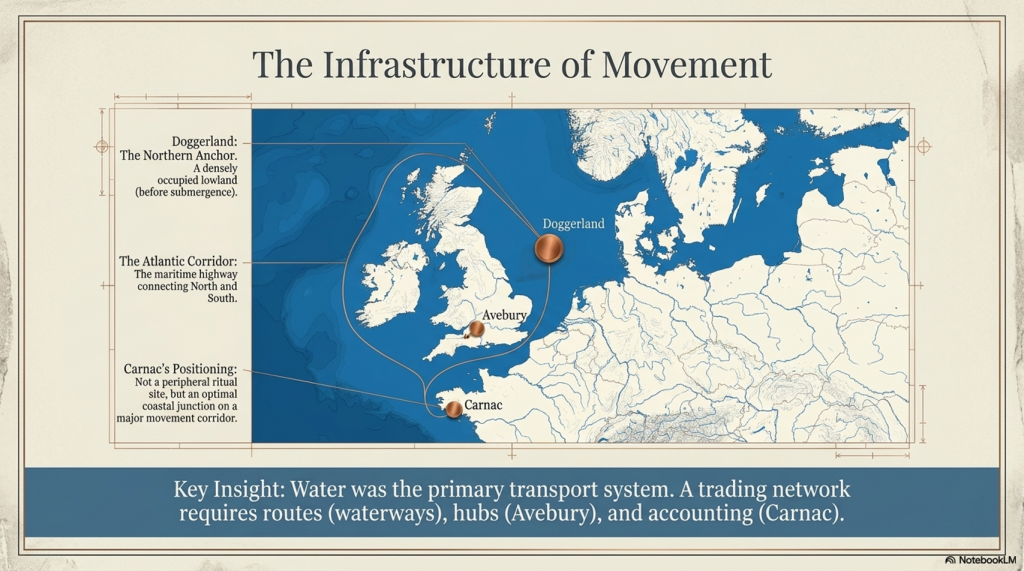
The Atlantic Corridor
Now place Carnac within that reality.
Carnac stones sits on:
- a sheltered Atlantic coastline
- within reach of major sea routes
- at a natural entry point between north and south
From here, movement extends:
- North → Britain and the Doggerland basin
- West → Atlantic coastal systems
- South → Iberia and Mediterranean connections
This is not a peripheral location.
👉 It is a junction
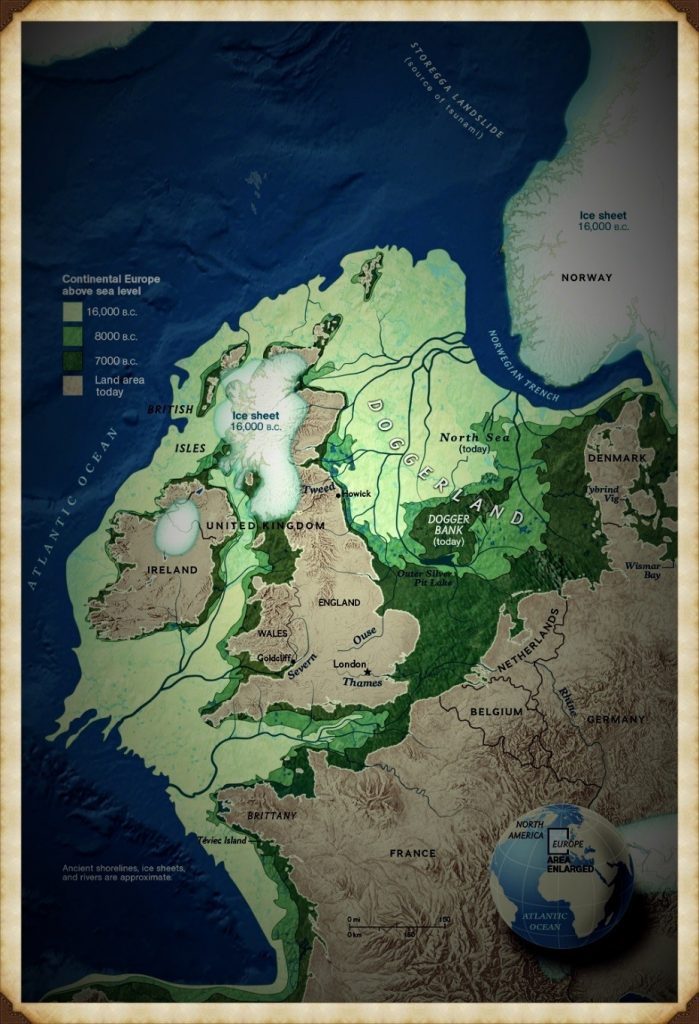
Doggerland — The Northern Anchor
Before submergence, Doggerland formed:
- a vast lowland connecting Britain to Europe
- rich in resources
- densely occupied
Its gradual loss due to rising waters created:
👉 displacement
👉 migration
👉 reorganisation of trade
Which means:
👉 trade routes did not disappear
👉 they shifted
And those shifts would have followed:
👉 coastlines and waterways
Connecting the System
Now bring the pieces together:
- Carnac = coastal system
- Avebury = inland node
- Doggerland = northern network
These are not separate phenomena.
They are:
👉 connected points within a single movement system
What Trade Actually Requires
For a trading network to function at scale, it must have:
- routes (waterways)
- hubs (exchange points)
- accounting (value systems)
We now have:
- routes → Atlantic and river systems
- hubs → sites like Avebury
- accounting → emerging from stone systems
This is no longer speculative.
👉 It is structurally complete.
Why Location Matters
This is the key shift.
Carnac is not mysterious because of what it is.
👉 It is misunderstood because of where it is placed in interpretation.
Seen as a ritual site:
- its scale is excessive
- its structure is unexplained
Seen as part of a trade network:
- its location is optimal
- its scale is necessary
- its structure is functional
The Missing Link in Archaeology
Archaeology tends to isolate sites:
- study Avebury
- study Carnac
- study Doggerland
But systems do not work in isolation.
👉 They work through connection
And once the connection is introduced:
👉 the monuments stop being individual mysteries
👉 and start behaving as components
8. Carnac as a Linear Ledger — Recording Value Without Writing
If prehistoric societies required:
- a way to store value
- a way to transfer ownership
- a way to track accumulation over time
Then one question becomes unavoidable:
👉 What does a ledger look like in a world without writing?
Because a ledger is not optional.
It is the backbone of any economic system.
What a Ledger Must Do
Regardless of form, a ledger must:
- record units of value
- maintain sequence
- allow verification
- persist over time
In modern systems, this is done with:
- books
- databases
- digital records
In a prehistoric system, none of these exists.
So the system must be:
👉 physical
👉 visible
👉 ordered
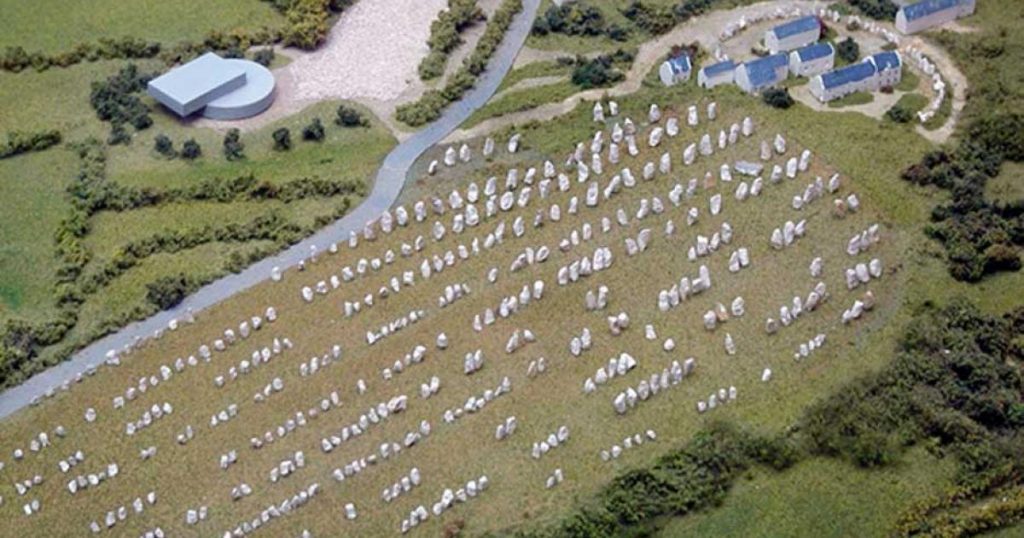
The Structure of Carnac stones
Now return to Carnac—but this time, ignore interpretation and focus only on structure.
What do we actually see?
- Long rows of stones
- Repeated, consistent spacing
- Parallel alignments
- Expansion over time
This is not a random placement.
👉 It is ordered sequencing
Sequence Is the Key
A ledger is not just a collection of units.
👉 It is a sequence of units
Because sequence allows:
- counting
- accumulation
- tracking change over time
Carnac provides exactly this:
👉 rows = sequences
👉 stones = units
From Alignment to Accounting
Under traditional models:
- rows are symbolic
- alignment is ritual
But this creates a problem:
👉 Why maintain strict order across thousands of stones?
Under a ledger model:
- order is essential
- repetition is necessary
- expansion reflects growth
Now the structure makes sense:
👉 Each stone is not a decoration
👉 It is a recorded unit
Expansion as Economic Growth
One of the most overlooked features of Carnac is:
👉 it was not built all at once
It developed over time.
This is critical.
Because:
- ritual monuments tend to be completed
- symbolic structures tend to be fixed
But Carnac:
👉 expands
And expansion implies:
- continuation
- accumulation
- increasing complexity
In economic terms:
👉 growth
Why Linear, Not Circular?
Compare Carnac to Avebury:
- Avebury → circular → centralised
- Carnac → linear → progressive
This difference is not stylistic.
It is functional.
A circular system:
👉 defines a fixed structure (a node, a hub)
A linear system:
👉 allows indefinite extension
Which is exactly what a ledger requires.
Verification Without Writing
A ledger must be verifiable.
Without writing, verification must be:
👉 communal
👉 visible
👉 consistent
Carnac achieves this:
- anyone can see the sequence
- anyone can recognise the structure
- the system cannot be hidden or altered easily
👉 The landscape itself becomes the record
Durability — The Perfect Archive
Unlike:
- wood (rots)
- clay (breaks)
- organic materials (decay)
Stone provides:
👉 permanence
Which means:
- records persist across generations
- value is stabilised over time
- the system cannot be easily erased
The Critical Shift
At this point, the interpretation flips completely.
Carnac is no longer:
- a ritual alignment
- an astronomical curiosity
- an unexplained anomaly
It becomes:
👉 a physical accounting system
Operating without:
- writing
- numbers
- portable currency
But fulfilling every requirement of a ledger.
9. Avebury — The Fixed Credit System (The Banking Node)
If Carnac stones function as a linear ledger, recording accumulation and sequence—
Then sites like Avebury must serve a different role.
Because their structure is fundamentally different.
A Different Kind of Design
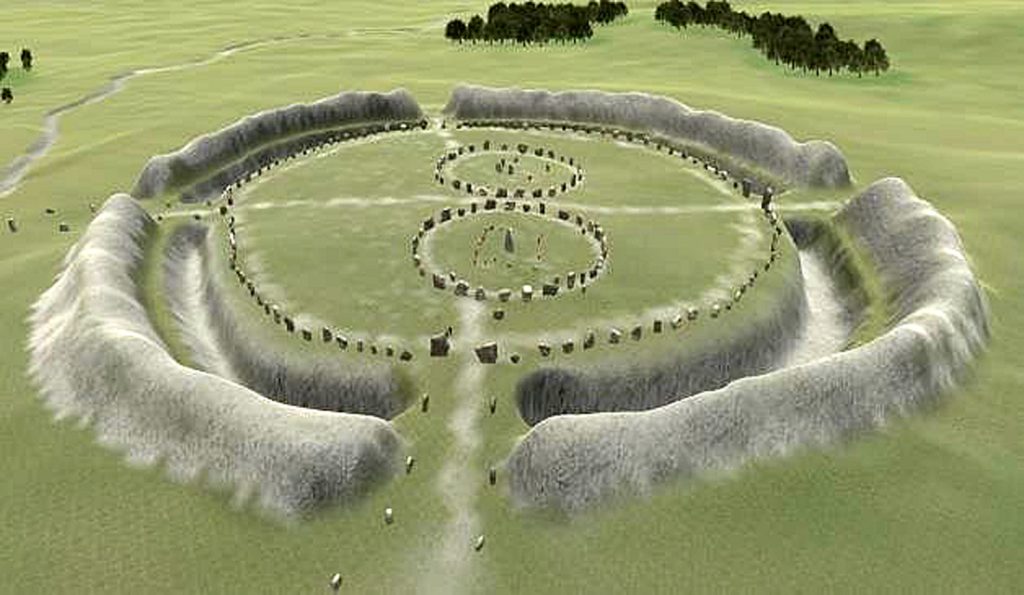
Avebury is not:
- linear
- expansive
- sequential
It is:
- circular
- enclosed
- fixed
This is not stylistic variation.
👉 It is a different system entirely.
What a Circular System Implies
A circle does something a line cannot:
👉 It defines a closed system
- no beginning
- no end
- no expansion
Everything exists:
👉 within a boundary
This is exactly what you would expect from:
👉 a controlled value system
From Ledger to Account
If Carnac records value over distance and time—
Then Avebury represents:
👉 where that value is held
Not tracked.
👉 stored
The Function of Enclosure
Avebury’s defining feature is not just its stones.
It is its boundary:
- massive ditch
- continuous bank
- controlled interior space
This is not defensive in any practical sense.
It does not protect against attack.
Instead, it does something far more specific:
👉 It defines inclusion
👉 It separates:
- inside vs outside
- recognised vs unrecognised
- accounted vs unaccounted
The Bank Analogy — But Physical
In modern systems:
- banks store value
- ledgers track value
At Avebury:
- the circle = the account
- the stones = the stored units
This is not a metaphor.
👉 It is structural equivalence.
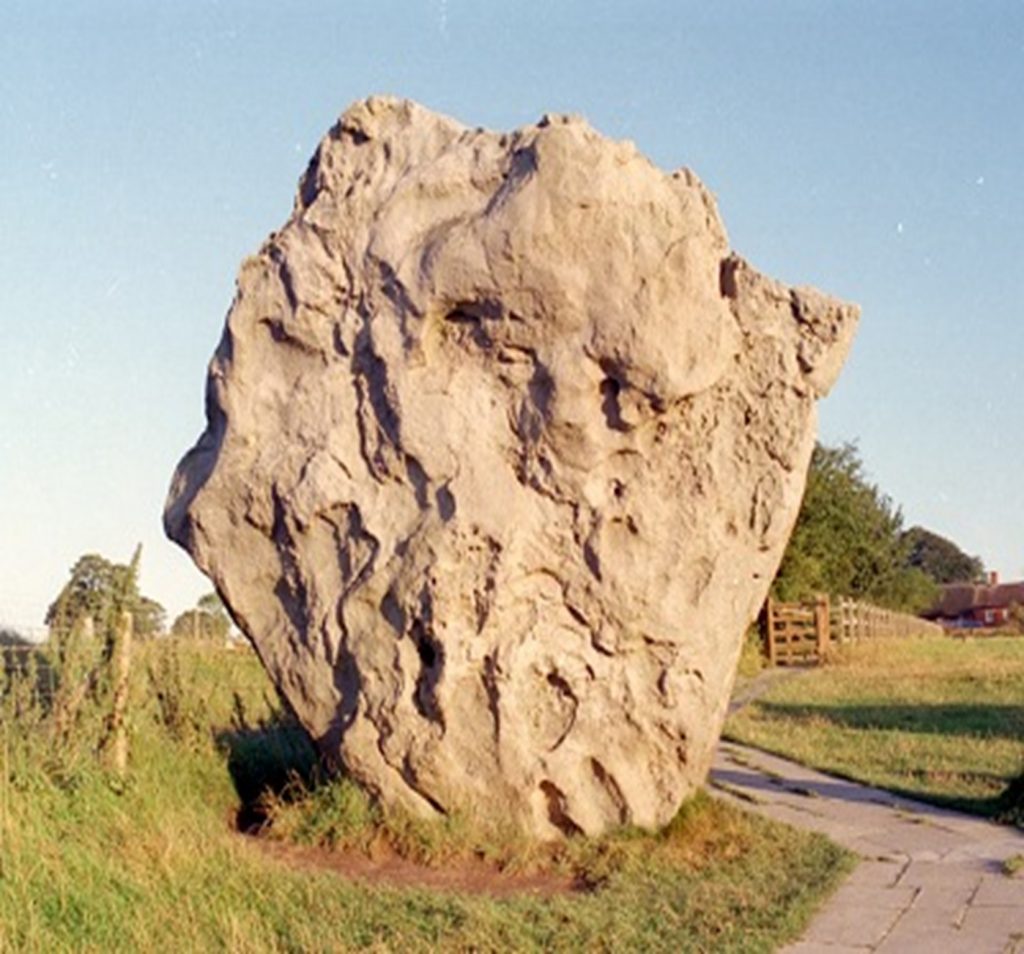
Why the Stones Are Massive
If stones represent value, their size is not a decorative feature.
It serves multiple purposes:
- visibility → public verification
- effort → embedded value
- immutability → cannot be easily altered
A large stone:
👉 is difficult to create
👉 difficult to move
👉 impossible to fake
Which makes it:
👉 a perfect high-value marker
Ownership Without Movement
Now return to the principle proven in Yap:
👉 value does not require physical transfer
At Avebury:
- stones remain fixed
- Ownership changes socially
This allows:
- transfer of value
- without transport
- without loss
- without duplication
Why a Circle Works as a Credit System
A circular layout allows:
- division into positions
- fixed reference points
- stable relationships between units
This creates:
👉 a structured, finite system
Unlike Carnac, which expands indefinitely—
Avebury:
👉 defines limits
Which is essential for:
👉 controlling value
The Role of the Community
Like all pre-written systems, this depends on:
👉 collective recognition
The community knows:
- which stone represents what
- who controls which part
- how value is transferred
Again:
👉 The people are the ledger
Connecting the System
Now the relationship becomes clear:
- Carnac → records accumulation (ledger)
- Avebury → holds value (account)
Both are required.
Because:
👉 Recording without storage is useless
👉 storage without recording is unstable
Together, they form:
👉 a complete economic system
10. Conclusion — The Economic System Hidden in Plain Sight
At the beginning of this analysis, a simple question was asked:
👉 What economic system made monuments like Avebury and Carnac stones possible?
Archaeology has never answered it.
Because it has never looked for one.
The System Reconstructed
What emerges instead is not a mystery—but a structure:
- Stone = value representation
- Carnac = ledger (recording system)
- Avebury = market (exchange system)
- Waterways = transport network
This is not a symbolic interpretation.
👉 It is a complete economic model
The Casino Analogy — Value Within a Defined System
To understand how this works, consider a modern example:
👉 a casino
Inside a casino:
- chips have value
- they can be exchanged for goods, services, or money
- they act as a credit system

But outside the casino:
👉 They are worthless
Why?
👉 Because value only exists within a recognised enclosure
This is exactly what we see at Avebury:
- a defined boundary
- a recognised system
- a shared agreement of value
Inside the enclosure:
👉 stone = currency
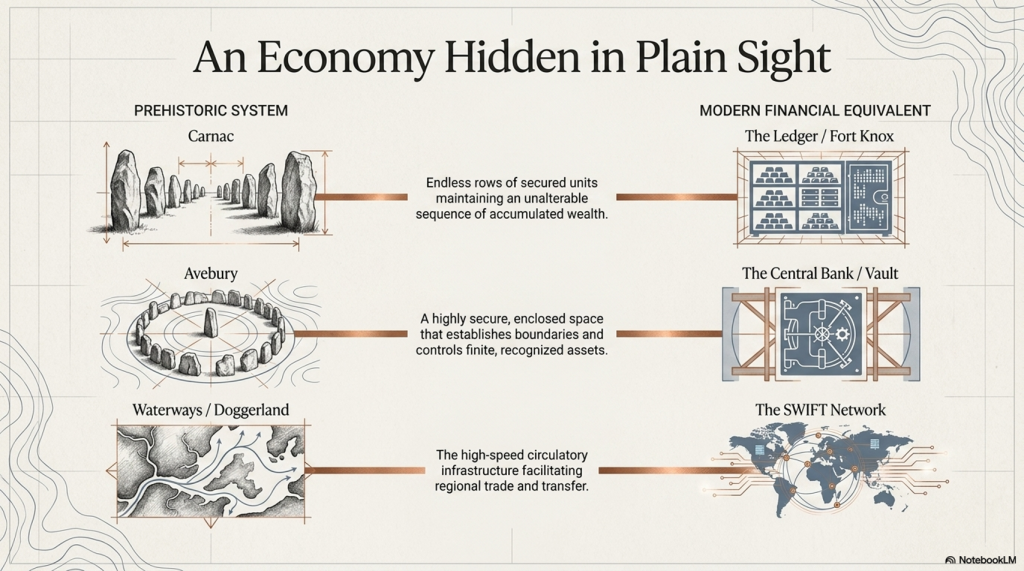
Carnac and the Ledger — Still Used Today
Now return to the Carnac stones.
What appears as endless rows of stones is not random.
👉 It is ordered, sequential, and expandable
Now compare that to modern financial systems.
In places like:
- Bank of England
- Fort Knox
Gold is stored:
- in rows
- on shelves
- in ordered sequences
Each bar:
- marked
- recorded
- assigned ownership
But crucially:
👉 The gold does not move
Ownership changes.
Credit is issued.
Value is transferred.
The Critical Parallel
This is the same system.
At Carnac:
- stones = units
- rows = sequence
- structure = ledger
At Fort Knox or the Bank of England:
- gold bars = units
- shelves = sequence
- vault = ledger
In both cases:
👉 the object remains fixed
👉 the value moves
Credit Without Movement
This is the key insight that unlocks everything.
We assume trade requires the movement of goods or money.
But in advanced systems:
👉 it does not
Value can be:
- assigned
- transferred
- redeemed
Without the underlying asset ever moving.
This is not modern innovation.
👉 It is a fundamental economic principle
A System That Never Disappeared
What we are seeing in prehistoric Britain and Europe is not a lost system.
It is:
👉 an early version of the same system still in use today
- casinos
- banks
- vaults
- markets
All operate on the same foundation:
👉 recognised value within a defined structure
Why Archaeology Missed It
Because it has been looking for:
- ritual
- belief
- symbolism
Instead of:
👉 function
Once the function is restored:
- Carnac is no longer an anomaly
- Avebury is no longer a mystery
- stone circles are no longer isolated
They become:
👉 infrastructure
The Final Realisation
No society builds:
- thousands of stones in sequence
- massive enclosed gathering sites
- interconnected networks across waterways
Without a system behind them.
And that system is now visible:
👉 a prehistoric economy
Operating through:
- stone-based value
- physical ledgers
- controlled marketplaces
- waterborne trade networks
The One Line That Changes Everything
If you strip everything back, it comes down to this:
👉 The stones were never the mystery.
👉 The economy they represent was.
PODCAST

Author’s Biography
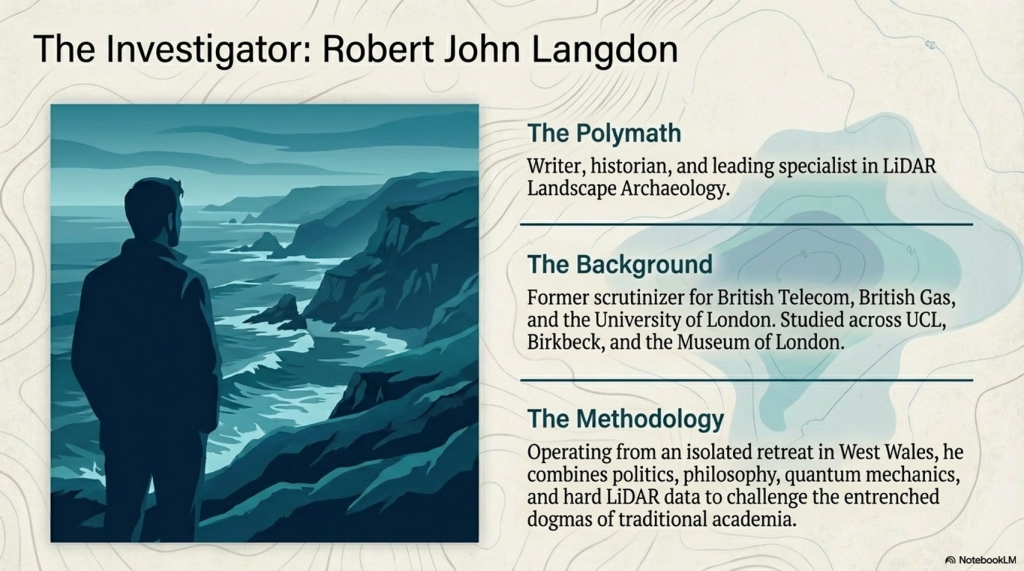
Robert John Langdon, a polymathic luminary, emerges as a writer, historian, and eminent specialist in LiDAR Landscape Archaeology.
His intellectual voyage has been interwoven with stints as an astute scrutineer in government and grand corporate bastions, a tapestry spanning British Telecommunications, Cable and Wireless, British Gas, and the esteemed University of London.
A decade hence, Robert’s transition into retirement unfurled a chapter of insatiable curiosity. This phase saw him immerse himself in Politics, Archaeology, Philosophy, and the enigmatic realm of Quantum Mechanics. His academic odyssey traversed the venerable corridors of knowledge hubs such as the Museum of London, University College London, Birkbeck College, The City Literature Institute, and Chichester University.
In the symphony of his life, Robert is a custodian of three progeny and a pair of cherished grandchildren. His sanctuary lies ensconced in the embrace of West Wales, where he inhabits an isolated cottage, its windows framing a vista of the boundless sea – a retreat from the scrutinising gaze of Her Majesty’s Revenue and Customs, an amiable clandestinity in the lap of nature.
Exploring Prehistoric Britain: A Journey Through Time
My blog delves into the fascinating mysteries of prehistoric Britain, challenging conventional narratives and offering fresh perspectives grounded in cutting-edge research, particularly LiDAR technology. I invite you to explore some key areas of my research. For example, the Wansdyke, often cited as a defensive structure, is re-examined in light of new evidence. I’ve presented my findings in my blog post Wansdyke: A British Frontier Wall – ‘Debunked’, and a Wansdyke LiDAR Flyover video further visualises my conclusions.
My work also often challenges established archaeological dogma. I argue that many sites, such as Hambledon Hill, commonly identified as Iron Age hillforts, are not what they seem. My posts Lidar Investigation Hambledon Hill – NOT an ‘Iron Age Fort’ and Unmasking the “Iron Age Hillfort” Myth explore these ideas in detail and offer an alternative view. Similarly, sites like Cissbury Ring and White Sheet Camp receive re-evaluations based on LiDAR analysis in my posts “Lidar Investigation Cissbury Ring through time” and “Lidar Investigation White Sheet Camp,“ revealing fascinating insights into their true purpose. I have also examined South Cadbury Castle, often linked to the mythical Camelot56.
My research also extends to ancient water management, including the role of canals and other linear earthworks. I have discussed the true origins of Car Dyke in multiple posts, including Car Dyke – ABC News Podcast and Lidar Investigation Car Dyke – North Section, which suggest a Mesolithic origin 2357. I also explore the misidentification of Roman aqueducts, as seen in my posts on the Great Chesters (Roman) Aqueduct. My research has also been greatly informed by my post-glacial flooding hypothesis, which has helped explain landscape transformations over time. I have discussed this hypothesis in several posts, including AI now supports my Post-Glacial Flooding Hypothesis and Exploring Britain’s Flooded Past: A Personal Journey
Finally, my blog also investigates prehistoric burial practices, as seen in Prehistoric Burial Practices of Britain and explores the mystery of Pillow Mounds, often mistaken for medieval rabbit warrens, but with a potential link to Bronze Age cremation in my posts: Pillow Mounds: A Bronze Age Legacy of Cremation? and The Mystery of Pillow Mounds: Are They Really Medieval Rabbit Warrens?. My research also includes astronomical insights into ancient sites, for example, in Rediscovering the Winter Solstice: The Original Winter Festival. I also review new information about the construction of Stonehenge in The Stonehenge Enigma.
Further Reading
For those interested in British Prehistory, visit www.prehistoric-britain.co.uk, a comprehensive resource featuring an extensive collection of archaeology articles, modern LiDAR investigations, and groundbreaking research. The site also includes insights and excerpts from the acclaimed Robert John Langdon Trilogy, a series of books that explore Britain during the Prehistoric period. Titles in the trilogy include The Stonehenge Enigma, Dawn of the Lost Civilisation, and The Post-Glacial Flooding Hypothesis, which offer compelling evidence of ancient landscapes shaped by post-glacial flooding.
To further explore these topics, Robert John Langdon has developed a dedicated YouTube channel featuring over 100 video documentaries and investigations that complement the trilogy. Notable discoveries and studies showcased on the channel include 13 Things that Don’t Make Sense in History and the revelation of Silbury Avenue – The Lost Stone Avenue, a rediscovered prehistoric feature at Avebury, Wiltshire.
In addition to his main works, Langdon has released a series of shorter, accessible publications, ideal for readers delving into specific topics. These include:
- The Ancient Mariners
- Stonehenge Built 8300 BCE
- Old Sarum
- Prehistoric Rivers
- Dykes, Ditches, and Earthworks
- Echoes of Atlantis
- Homo Superior
- 13 Things that Don’t Make Sense in History
- Silbury Avenue – The Lost Stone Avenue
- Offa’s Dyke
- The Stonehenge Enigma
- The Post-Glacial Flooding Hypothesis
- The Stonehenge Hoax
- Dawn of the Lost Civilisation
- Darwin’s Children
- Great Chester’s Roman Aqueduct
- Wansdyke
For active discussions and updates on the trilogy’s findings and recent LiDAR investigations, join our vibrant community on Facebook. Engage with like-minded enthusiasts by leaving a message or contributing to debates in our Facebook Group.
Whether through the books, the website, or interactive videos, we aim to provide a deeper understanding of Britain’s fascinating prehistoric past. We encourage you to explore these resources and uncover the mysteries of ancient landscapes through the lens of modern archaeology.
For more information, including chapter extracts and related publications, visit the Robert John Langdon Author Page. Dive into works such as The Stonehenge Enigma or Dawn of the Lost Civilisation, and explore cutting-edge theories that challenge traditional historical narratives.
Other Blogs
1
a
- Ackling Dyke – Facts and the Archaeological Fiction
- Ackling Dyke – Part II – Puddletown Forest: When a Roman Road Becomes an Assumption
- Ackling Dyke – Part III – The Roman Road Mystery Finally Makes Sense
- AI now Supports – Homo Superior
- AI now supports my Post-Glacial Flooding Hypothesis
- Alexander the Great sailed into India – where no rivers exist today
- Ancient Secrets of Althorp – debunked
- Antler Picks built Ancient Monuments – yet there is no real evidence
- Antonine Wall – Prehistoric Canals (Dykes)
- Archaeological ‘pulp fiction’ – has archaeology turned from science?
- Archaeological Pseudoscience
- Archaeology in the Post-Truth Era
- Archaeology: A Bad Science?
- Archaeology: A Harbour for Fantasists?
- Archaeology: Fact or Fiction?
- Archaeology: The Flaws of Peer Review
- Archaeology’s Bayesian Mistake: Stop Averaging the Past
- Are Raised Beaches Archaeological Pseudoscience?
- Atlantis Found: The Mathematical Proof That Plato’s Lost City Was Doggerland
- ATLANTIS: Discovery with Dan Snow Debunked
- Avebury Ditch – Avebury Phase 2
- Avebury through time
- Avebury’s great mystery revealed
- Avebury’s Lost Stone Avenue – Flipbook
b
- Battlesbury Hill – Wiltshire
- Beyond Stone and Bone: Rethinking the Megalithic Architects of Northern Europe
- BGS Prehistoric River Map
- Blackhenge: Debunking the Media misinterpretation of the Stonehenge Builders
- Brain capacity (Cro-Magnon Man)
- Britain’s First Road – Stonehenge Avenue
- Britain’s Giant Prehistoric Waterways
- British Roman Ports miles away from the coast
c
- Caerfai Promontory Fort – Archaeological Nonsense
- Car Dyke – ABC News PodCast
- Car Dyke – North Section
- Cardigan Bay: The Holocene Evidence the Old Geological Story Has Missed
- CASE STUDY – An Inconvenient TRUTH (Craig Rhos Y Felin)
- Case Study – River Avon
- Case Study – Woodhenge Reconstruction
- Chapter 2 – Craig Rhos-Y-Felin Debunked
- Chapter 2 – Stonehenge Phase I
- Chapter 2 – Variation of the Species
- Chapter 3 – Post Glacial Sea Levels
- Chapter 3 – Stonehenge Phase II
- Chapter 7 – Britain’s Post-Glacial Flooding
- Cissbury Ring through time
- Clement Reid, Doggerland, and the Archaeological Establishment
- Cro-Magnon Brain Capacity
- Cro-Magnon Megalithic Builders: Measurement, Biology, and the DNA
- Cro-Magnons – An Explainer
d
- Darwin’s Children – Flipbook
- Darwin’s Children – The Cro-Magnons
- Dawn of The Lost Civilisation – 1/10
- Dawn of the Lost Civilisation – Flipbook
- Dawn of the Lost Civilisation – Introduction
- Digging for Britain – Cerne Abbas
- Digging for Britain Debunked – Cerne Abbas 2
- Digging Up Britain’s Past – Debunked
- DLC Chapter 1 – The Ascent of Man
- Durrington Walls – Woodhenge through time
- Durrington Walls Revisited: Platforms, Fish Traps, and a Managed Mesolithic Landscape
- Dyke Construction – Hydrology 101
- Dykes Ditches and Earthworks
- DYKES of Britain
e
f
g
h
- Hadrian’s Wall – Military Way Hoax
- Hadrian’s Wall – the Stanegate Hoax
- Hadrian’s Wall Vallum – Prehistoric Canals – FREE Online Book
- Hadrian’s Wall LiDAR investigation
- Hambledon Hill – NOT an ‘Iron Age Fort’
- Hayling Island Lidar Maps
- Hidden Sources of Ancient Dykes: Tracing Underground Groundwater Fractals
- Historic River Avon
- Hollingsbury Camp Brighton – A Hillfort… or a Forgotten Harbour?
- Hollows, Sunken Lanes and Palaeochannels
- Homo Superior – Flipbook
- Homo Superior – History’s Giants
- How Lidar will change Archaeology
- Hydrology 101 Simplified: Why Britain’s Dykes Worked Without Rivers
i
l
m
- Maiden Castle through time
- Mathematics Meets Archaeology: Discovering the Mesolithic Origins of Car Dyke
- Mesolithic River Avon
- Mesolithic Stonehenge
- Minerals found in Prehistoric and Roman Quarries
- Mining in the Prehistoric to Roman Period
- Mount Caburn through time
- Mysteries of the Oldest Boatyard Uncovered
- Mythological Dragons – a non-existent animal that is shared by the World.
o
- Offa’s Dyke Flipbook
- Old Sarum Lidar Map
- Old Sarum Through Time…………….
- On Sunken Lands of the North Sea – Lived the World’s Greatest Civilisation.
- OSL Chronicles: Questioning Time in the Geological Tale of the Avon Valley
- Oswestry LiDAR Survey
- Oswestry through time
- Oysters in Archaeology: Nature’s Ancient Water Filters?
p
- Pillow Mounds: A Bronze Age Legacy of Cremation?
- Pinkery Canal
- Plato Was Right: The Archaeological Evidence the Academics Never Expected
- Post Glacial Flooding – Flipbook
- Prehistoric Burial Practices of Britain
- Prehistoric Canals – Wansdyke
- Prehistoric Canals – Wansdyke
- Prehistoric Canals (Dykes) – Great Chesters Aqueduct (The Vallum Pt. 4)
- Prehistoric Canals (Dykes) – Offa’s Dyke (Chepstow)
- Prehistoric Canals (Dykes) – Offa’s Dyke (LiDAR Survey)
- Prehistoric Canals (Dykes) – Offa’s Dyke Survey (End of Section A)
- Prehistoric Canals (Dykes) – Wansdyke (4)
- Prehistoric Canals Wansdyke 2
- Professor Bonkers and the mad, mad World of Archaeology
r
- Real-World Confirmation of Post-Glacial Flooding
- Rebirth in Stone: Decrypting the Winter Solstice Legacy of Stonehenge
- Rediscovering the Winter Solstice: The Original Winter Festival
- Rethinking Ancient Boundaries: The Vallum and Offa’s Dyke”
- Rethinking Ogham: Could Ireland’s Oldest Script Have Begun as a Tally System?
- Rethinking The Past: Mathematical Proof of Langdon’s Post-Glacial Flooding Hypothesis
- Revolutionising History: Car Dyke Unveiled as Prehistoric & the Launch of FusionBook 360
- Rising Evidence, Falling Rivers: The Real Story of Europe’s First Farmers
- Rivers of the Past Were Higher: A Fresh Perspective on Prehistoric Hydrology
s
- Sea Level Changes
- Section A – NY26SW
- Section B – NY25NE & NY26SE
- Section C – NY35NW
- Section D – NY35NE
- Section E – NY46SW & NY45NW
- Section F – NY46SE & NY45NE
- Section G – NY56SW
- Section H – NY56NE & NY56SE
- Section I – NY66NW
- Section J – NY66NE
- Section K – NY76NW
- Section L – NY76NE
- Section M – NY87SW & NY86NW
- Section N – NY87SE
- Section O – NY97SW & NY96NW
- Section P – NY96NE
- Section Q – NZ06NW
- Section R – NZ06NE
- Section S – NZ16NW
- Section T – NZ16NE
- Section U – NZ26NW & NZ26SW
- Section V – NZ26NE & NZ26SE
- Silbury Avenue – Avebury’s First Stone Avenue
- Silbury Hill
- Silbury Hill / Sanctuary – Avebury Phase 3
- Sky Maps of Prehistoric Britain
- Somerset Plain – Signs of Post-Glacial Flooding
- South Cadbury Castle – Camelot
- Statonbury Camp near Bath – an example of West Wansdyke
- Stone me – the druids are looking the wrong way on Solstice day
- Stone Transportation and Dumb Censorship
- Stonehenge – Monument to the Dead
- Stonehenge Hoax – Dating the Monument
- Stonehenge Hoax – Round Monument?
- Stonehenge Hoax – Summer Solstice
- Stonehenge LiDAR tour
- Stonehenge Phase 1 — Britain’s First Monument
- Stonehenge Phase I (The Stonehenge Landscape)
- Stonehenge Solved – Pythagorean maths put to use 4,000 years before he was born
- Stonehenge Through Time
- Stonehenge, Doggerland and Atlantis connection
- Stonehenge: Borehole Evidence of Post-Glacial Flooding
- Stonehenge: Discovery with Dan Snow Debunked
- Stonehenge: The World’s First Computer – FREE Book
- Stonehenge: The Worlds First Computer
- Stonehenge’s The Lost Circle Revealed – DEBUNKED
- Stonehenge’s Chronological Mirage
t
- Ten Reasons Why Car Dyke Blows Britain’s Earthwork Myths Out of the Water
- Ten Things You Didn’t Know About Britain’s Prehistoric Flooded Past
- Ten thousand year old boats found on Northern Europe’s Hillsides
- Ten thousand-year-old boats found on Northern Europe’s Hillsides
- Testing Plato’s Atlantis Against Reality
- The “Hunter-Gatherer” Myth: Why It’s Time to Bury This Outdated Term
- The Ackling Dyke Smoking Gun
- The Ancient Mariners – Flipbook
- The Ancient Mariners – Prehistoric seafarers of the Mesolithic
- The Ascent of Man — From Survival to Systems
- The Beringian Migration Myth: Why the Peopling of the Americas by Foot is Mathematically and Logistically Impossible
- The Bluestone Enigma
- The Bulford Hoax: The “Simpler, Older Stonehenge” That Wasn’t
- The Cheddar Man Hoax
- The Cro-Magnon Cover-Up: How DNA and PR Labels Erased Our Real Ancestry
- The Dolmen and Long Barrow Connection
- The Durrington Mega-Monument Hoax: What Lies Beneath? – Debunked
- The Durrington Walls Hoax – it’s not a henge?
- The Dyke Myth Collapses: Excavation and Dating Prove Britain’s Great Dykes Are Prehistoric Canals
- The First European Smelted Bronzes
- The Fury of the Past: Natural Disasters in Historical and Prehistoric Britain
- The Giant’s Graves of Cumbria
- The Giants of Prehistory: Cro-Magnon and the Ancient Monuments
- The Great Ancient DNA Illusion: How Statistical Models Became Archaeological “Facts”
- The Great Antler Pick Hoax
- The Great Bell Beaker Migration Myth
- The Great Chichester Hoax – A Bridge too far?
- The Great Dorchester Aqueduct Hoax
- The Great Farming Hoax – (Einkorn Wheat)
- The Great Farming Migration Hoax
- The Great Hadrian’s Wall Hoax
- The Great Iron Age Hill Fort Hoax
- The Great Offa’s Dyke Hoax
- The Great Prehistoric Migration Hoax
- The Great Stone Transportation Hoax
- The Great Stonehenge Hoax
- The Great Wansdyke Hoax
- THE GREAT WEST WOODS HOAX — WHEN ONE STONE BECOMES FIFTY
- The Henge and River Relationship
- The Logistical Impossibility of Defending Maiden Castle
- The Long Barrow and Dolmen Enigma
- The Long Barrow Mystery
- The Long Barrow Mystery: Unravelling Ancient Connections
- The Lost Island of Avalon – revealed
- The Maiden Way Hoax – A Closer Look at an Ancient Road’s Hidden History
- The Maths – LGM total ice volume
- The Mystery of Pillow Mounds: Are They Really Medieval Rabbit Warrens?
- THE ODYSSEY PROBLEM: WHY DID A WEEK-LONG VOYAGE BECOME A TEN-YEAR EPIC?
- The Old Sarum Hoax
- The Oldest Boat Yard in the World found in Wales
- The Perils of Paradigm Shifts: Why Unconventional Hypotheses Get Branded as Pseudoscience
- The Post-Glacial Flooding Hypothesis – 1/11
- The Post-Glacial Flooding Hypothesis – Flipbook
- The Post-Glacial Flooding Theory
- The Problem with Hadrian’s Vallum
- The Rise of the Cro-Magnon (Homo Superior)
- The Roman Military Way Hoax
- The Silbury Hill Lighthouse?
- The Stone Money – Credit System
- The Stonehenge Avenue
- The Stonehenge Avenue
- The Stonehenge Code: Unveiling its 10,000-Year-Old Secret
- The Stonehenge Crescent: A Monument to a Lost World
- The Stonehenge Enigma – Flipbook
- The Stonehenge Enigma: Part 1/6
- The Stonehenge Hoax – Bluestone Quarry Site
- The Stonehenge Hoax – Flipbook
- The Stonehenge Hoax – Moving the Bluestones
- The Stonehenge Hoax – Periglacial Stripes
- The Stonehenge Hoax – Station Stones
- The Stonehenge Hoax – Stonehenge’s Location
- The Stonehenge Hoax – The Ditch
- The Stonehenge Hoax – The Slaughter Stone
- The Stonehenge Hoax – The Stonehenge Layer
- The Stonehenge Hoax – Totem Poles
- The Stonehenge Hoax – Woodhenge
- The Stonehenge Hospital
- The Stonehenge Transportation Mystery
- The Subtropical Britain Hoax
- The Troy, Hyperborea and Atlantis Connection
- The Vallum @ Hadrian’s Wall – it’s Prehistoric!
- The Vallum at Hadrian’s Wall (Summary)
- The Woodhenge Hoax
- Thirty Years of CAU Archaeology Going Nowhere?
- Three Dykes – Kidland Forest
- Thurnam’s 137 Skulls: The Forgotten People Behind Britain’s Megaliths.
- Top Ten Misidentified Fire Beacons in British History
- Troy Debunked – Troy did not exist in Asia Minor, but in fact, the North Sea island of Doggerland
- TSE – DVD Barrows
- TSE DVD – An Inconvenient Truth
- TSE DVD – Antler Picks
- TSE DVD – Avebury
- TSE DVD – Durrington Walls & Woodhenge
- TSE DVD – Dykes
- TSE DVD – Epilogue
- TSE DVD – Stonehenge Phase I
- TSE DVD – Stonehenge Phase II
- TSE DVD – The Post-Glacial Hypothesis
- TSE DVD Introduction
- TSE DVD Old Sarum
- Twigs, Charcoal, and the Death of the Saxon Dyke Myth
w
- Wansdyke – Short Film
- Wansdyke East – Prehistoric Canals
- Wansdyke Flipbook
- Wansdyke LiDAR Flyover
- Wansdyke: A British Frontier Wall – ‘Debunked’
- Was Columbus the first European to reach America?
- What Archaeology Missed Beneath Stonehenge
- White Sheet Camp
- Why a Simple Fence Beats a Massive Dyke (and What That Means for History)
- Windmill Hill – Avebury Phase 1
- Winter Solstice – Science, Propaganda and Indoctrination
- Woodhenge – the World’s First Lighthouse?